

Why Containers Suit Herbs So Well
Herbs are, on the whole, wonderfully forgiving plants. Many of the ones we cook with most — thyme, rosemary, oregano, sage — evolved on thin, stony hillsides in full sun, so they actually prefer the cramped, well-drained conditions of a pot to the rich, damp soil of a flower border. Growing them in containers lets you replicate that Mediterranean upbringing almost perfectly, and it puts fresh leaves within arm's reach of the kitchen door.
There is a practical advantage too. Mint, in particular, will romp through a border given half a chance and is notoriously difficult to remove once established. Confined to a pot, it stays exactly where you put it. Containers also mean you can grow herbs on a balcony, a windowsill, a couple of steps by the back door or a small paved yard — no digging required, and no need to worry about what sort of soil you have underneath.
Choosing Compact Varieties
Variety choice matters more in pots than in open ground, because you have limited root room. Look for compact or bushy cultivars rather than thuggish, sprawling types, and buy small plants from a garden centre or grow from seed in spring. Reliable choices include:
- Thyme — 'Foxley' or common thyme; small-leaved, tidy and happy in a 20cm pot.
- Sage — common sage or the compact 'Berggarten'; trim it after flowering to stop it going woody.
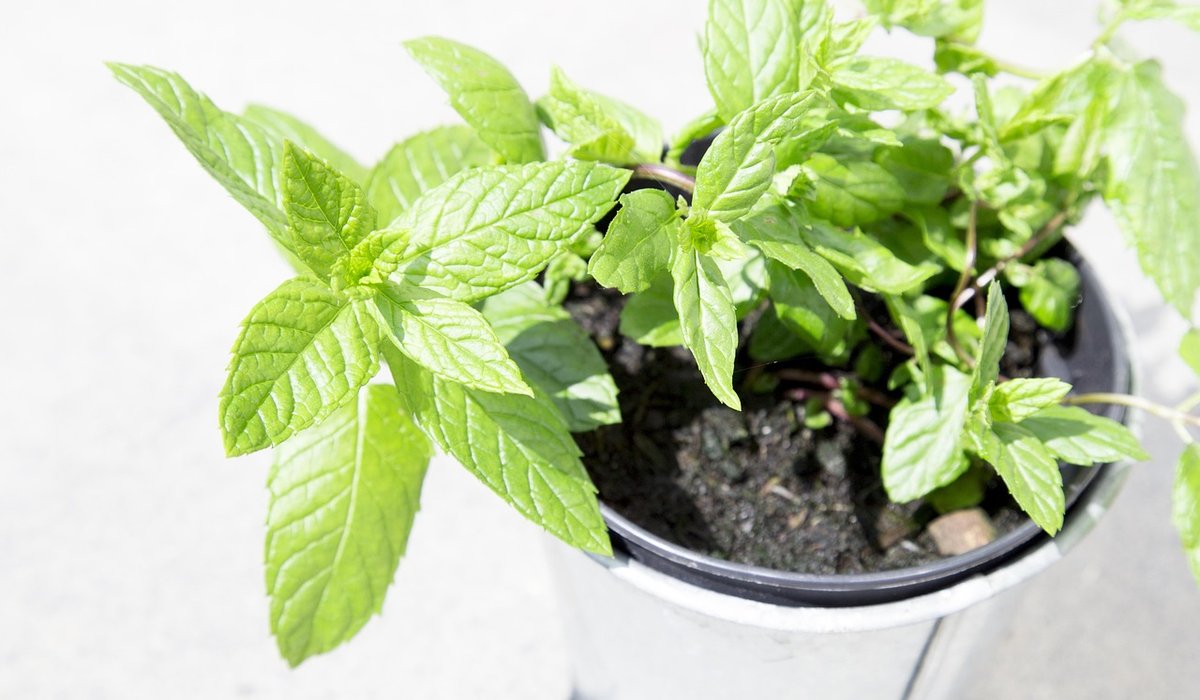
- Mint — garden mint or Moroccan mint, always in its own pot, never sharing with others.
- Basil — 'Greek Bush' or 'Sweet Genovese'; pinch out the tips regularly for a bushier plant.
- Chives — clump-forming and cheerful, with edible purple flowers in early summer.
- Parsley — 'Moss Curled' or flat-leaved; a biennial, so sow fresh each year.
- Oregano — 'Compactum' stays low and spreads neatly over the rim of a pot.
Compost and Drainage: Getting the Basics Right
Poor drainage is the single most common reason container herbs fail. Standard multipurpose compost holds far more water than these plants want, so mix in 25 to 30 per cent horticultural grit or perlite by volume to open it up. For the woody, drought-loving herbs — rosemary, thyme, sage, oregano — a loam-based compost such as John Innes No. 2 suits them better still, as it is heavier and drains more freely.
Always use pots with drainage holes and add a layer of broken crocks or gravel at the base. Size matters as well: 20–25cm pots for thyme, sage and chives, a 30cm pot for mint, and something around 15–20cm for basil. Standing pots on feet or small bricks keeps the drainage hole clear and stops slugs and worms blocking it from below. Topping the compost with a thin layer of grit looks smart and keeps the collar of the plant dry, which helps prevent rot.
Siting Your Pots for Plenty of Sunlight
Aim for at least six hours of direct sun a day. A south- or south-west-facing wall, patio or balcony is ideal. Indoor herbs do best on a bright windowsill, but keep foliage roughly 15–20cm back from the glass so it does not scorch in summer, and rotate the pots a quarter turn each week so the plants grow evenly rather than leaning towards the light.
Shelter matters too. Strong wind dries compost out quickly and snaps brittle stems, so a spot against a warm wall or a low screen is better than an exposed rooftop. Grouping pots together creates its own humid microclimate, which particularly suits basil and parsley.
Watering, Feeding and Harvesting
Terracotta dries out faster than glazed or plastic pots, so check daily in hot weather by pushing a finger about 2cm into the compost. Water in the morning when the top of the compost feels dry, and let the excess drain away — never leave pots sitting in a saucer of water. Mediterranean herbs prefer to dry out slightly between waterings; basil and mint like things a little moister.
Feeding should be restrained. A diluted liquid feed every fortnight is plenty for leafy herbs such as basil, parsley and chives. Go easy on thyme, rosemary and oregano: rich feeding produces lush growth with diluted flavour. Harvest little and often, pinching tips just above a pair of leaves and taking no more than a third of the plant at once. Nip out flower buds on basil and mint to keep the leaves sweet and productive.
Keeping Pots Going Through the Winter
Hardy herbs such as thyme, sage, rosemary and mint will usually survive outdoors. Move their pots to a sheltered spot against a wall, raise them onto feet so they are not sitting in winter wet, and water sparingly — sodden compost in cold weather kills more herbs than frost does. Tender types like basil are best treated as annuals and replaced each spring, or brought indoors onto a sunny sill before the first frosts.
Each spring, top-dress the compost with a couple of centimetres of fresh material, or repot into something slightly larger, dividing clumps of chives and mint while you are at it. Do that, and a modest collection of pots will keep you in fresh herbs for years.



John Doe
14 January, 2022Having no content in post should have adverse..
Chauffina Carr
10 April, 2022We use these tests all time! Killer stuff!
Jim Séchen
16 July, 2022Thanks for all the comments, everyone!